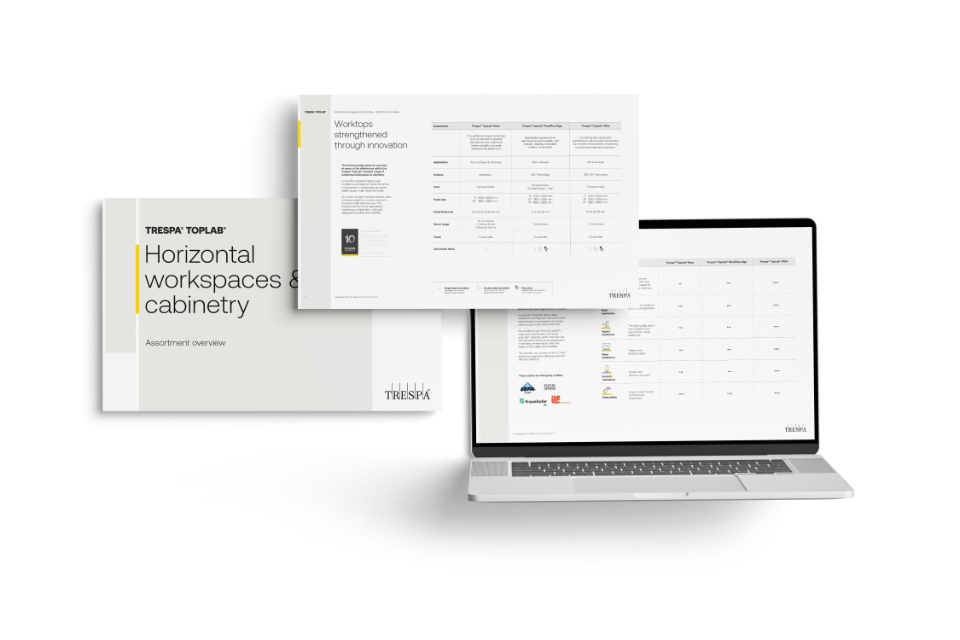
A solution for every environment
Trespa® TopLab® Ultim is available in a wide range of sizes, thicknesses and colours, ensuring the right specification for every laboratory project.
Read more about TopLab® Ultim
Today’s laboratories operate under vastly different demands than they did twenty years ago, facing heavier equipment, daily exposure to harsher and more diverse chemical reagents, and intensive round-the-clock utilization. And all this within costly, high-demand spaces that require more flexibility and a stronger commitment to occupant health and safety.
Recognizing our current HPL work surfaces, while still industry leading, might no longer suffice for tomorrow's research environments, we embarked on developing the next generation of scientific surfaces.
The result is the new EBC-AR surface technology, engineered to raise the bar in chemical, heat, scratch and wear resistance. To provide a dependable, long-term foundation for high-demanding workspaces.
Our new Electron Beam Cured Alumina Reinforced (EBC-AR) surface features fine alumina particles integrated into the surface, which is then cured using Electron Beam technology. Seamlessly integrated with Trespa’s homogeneous panel core, this surface technology formed the foundation of Trespa® TopLab® Ultim.
Over five years of intensive R&D efforts and countless iterations, the entire top-layer formulation was re-engineered, to make sure that the use of alumina as the most important addition, did not compromise the ease of cutting and machining that Trespa® TopLab® panels are known for.
In most labs, nobody thinks about the work surface until something goes wrong. Once installed, it is simply expected to endure.
Meanwhile, it takes constant abuse, from acids and reagents, to hot equipment, and knocks from instruments moved across it. You cannot see most of the damage while it occurs, and by the time you can, the surface has already failed. Structural integrity is compromised, and it can no longer be thoroughly sanitized.
The engineering behind the surface determines if its longevity is measured in months or decades.
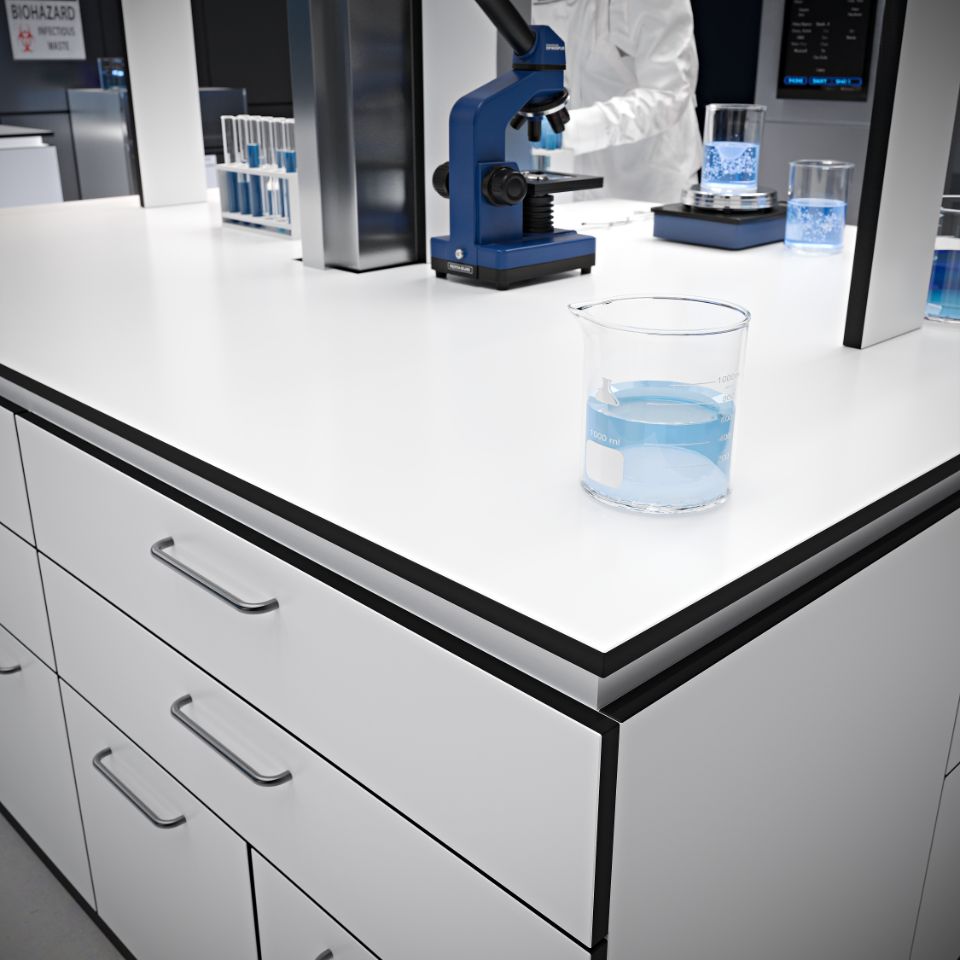
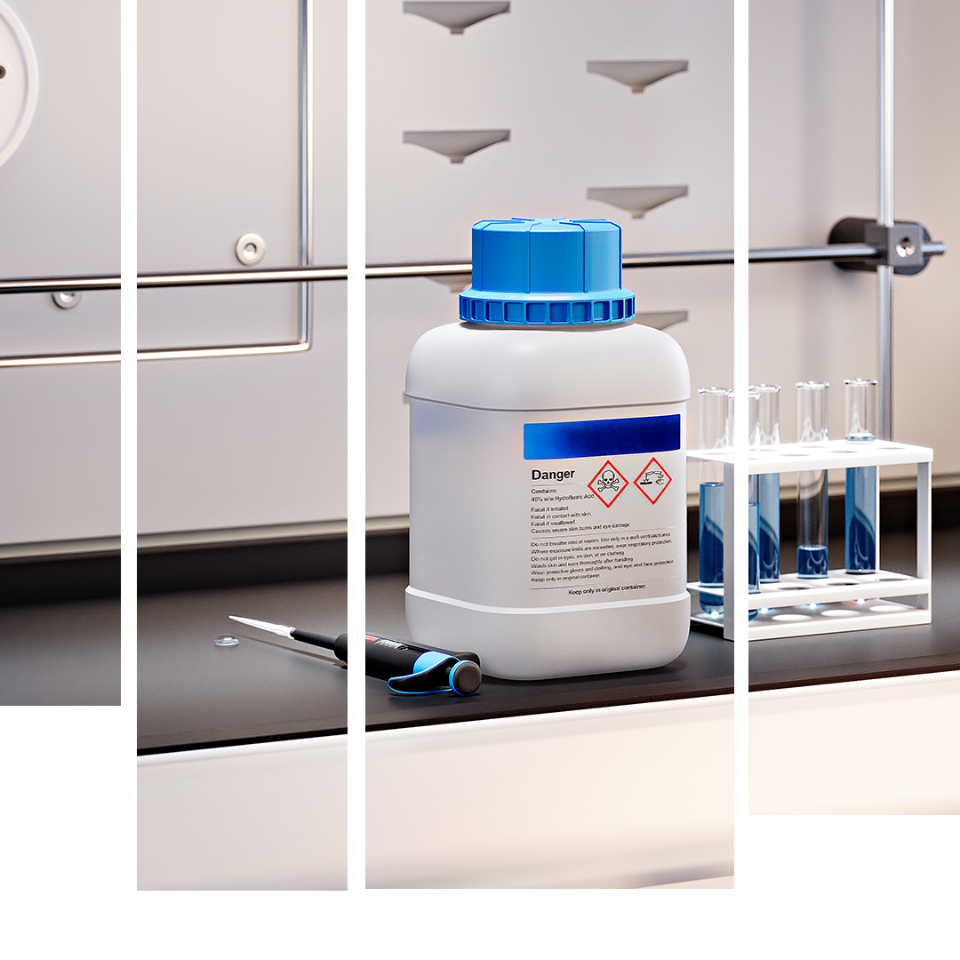
In a laboratory, chemical contact is not incidental: it is part of the process. Concentrated acids and aggressive reagents hit the surface daily, possibly for longer periods.
A conventional surface may resist first contact, but repeated or prolonged exposure will compromise it eventually. The EBC-AR surface changes this: its composition forms a tougher barrier, improving resistance across a broader range of chemicals, at higher concentrations.
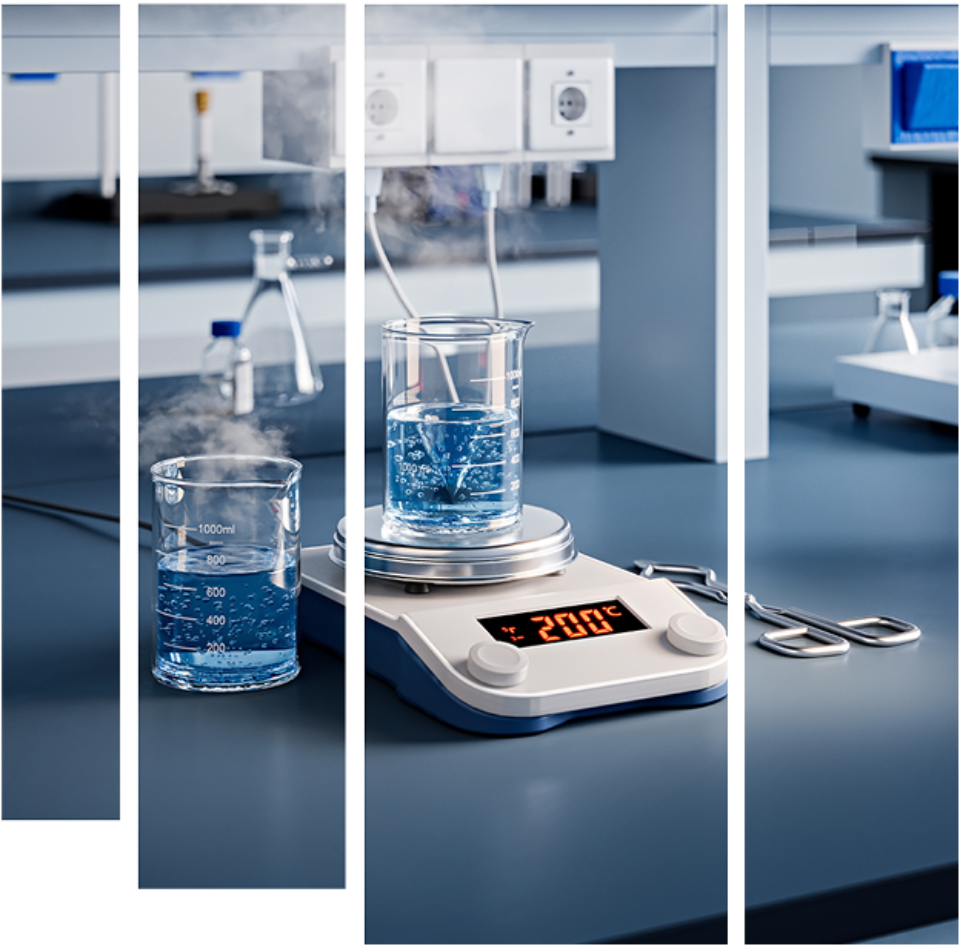
Heat resistance is often reduced to a number, but in a laboratory that number has consequences.
At 160°C, the standard threshold for most HPL surfaces, many common operations are already at the limit. There is little margin for error, and any exceedance risks permanent damage.
TopLab® Ultim is rated for dry heat up to 200°C, without compromising the surface after sustained contact. That extra 40°C changes what is possible on the work surface, reducing the risk of accidental damage.
A work surface is in use all day. Instruments slid across it, glassware and equipment moved into place, cleaning several times a day.
All of it wears the surface down. Scratches, dull patches, a finish that gradually looks used up. It happens slowly enough that nobody notices until the surface is already worn.
This is where TopLab® Ultim improves most. The alumina-reinforced top layer is harder, so it holds its finish and integrity through more of that daily handling.
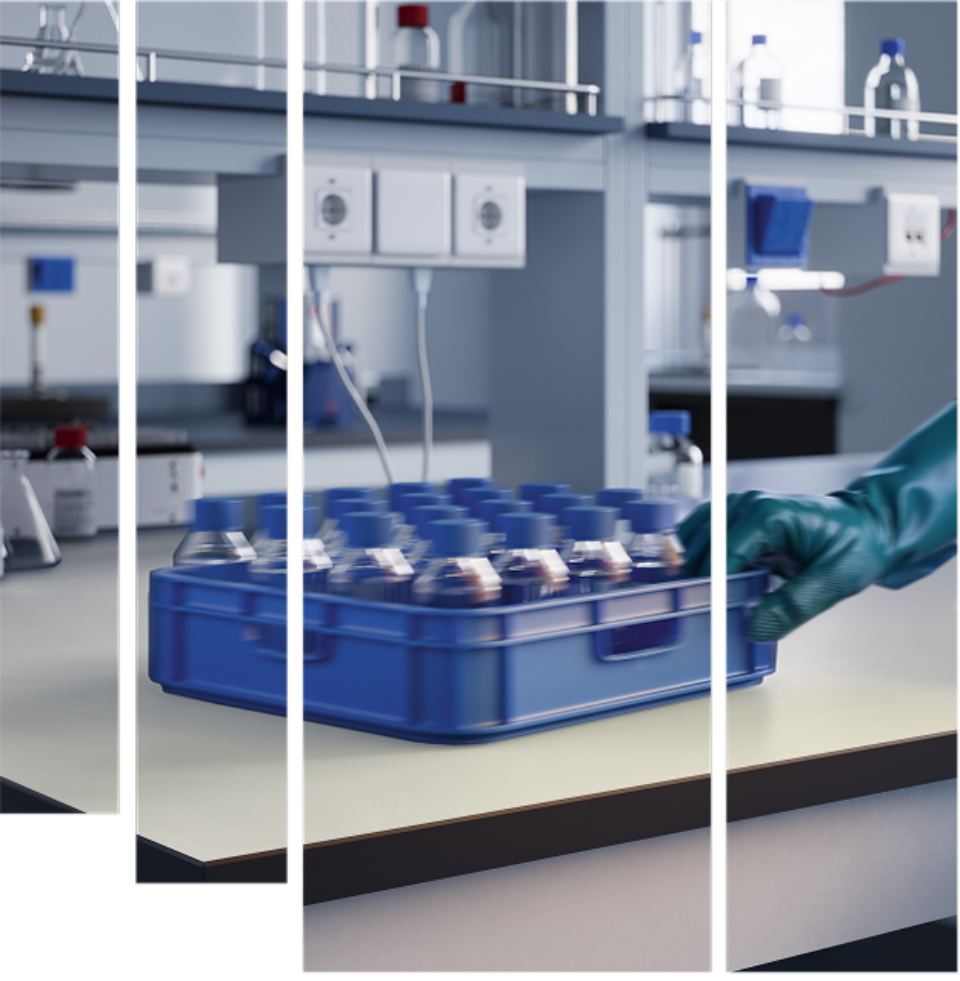
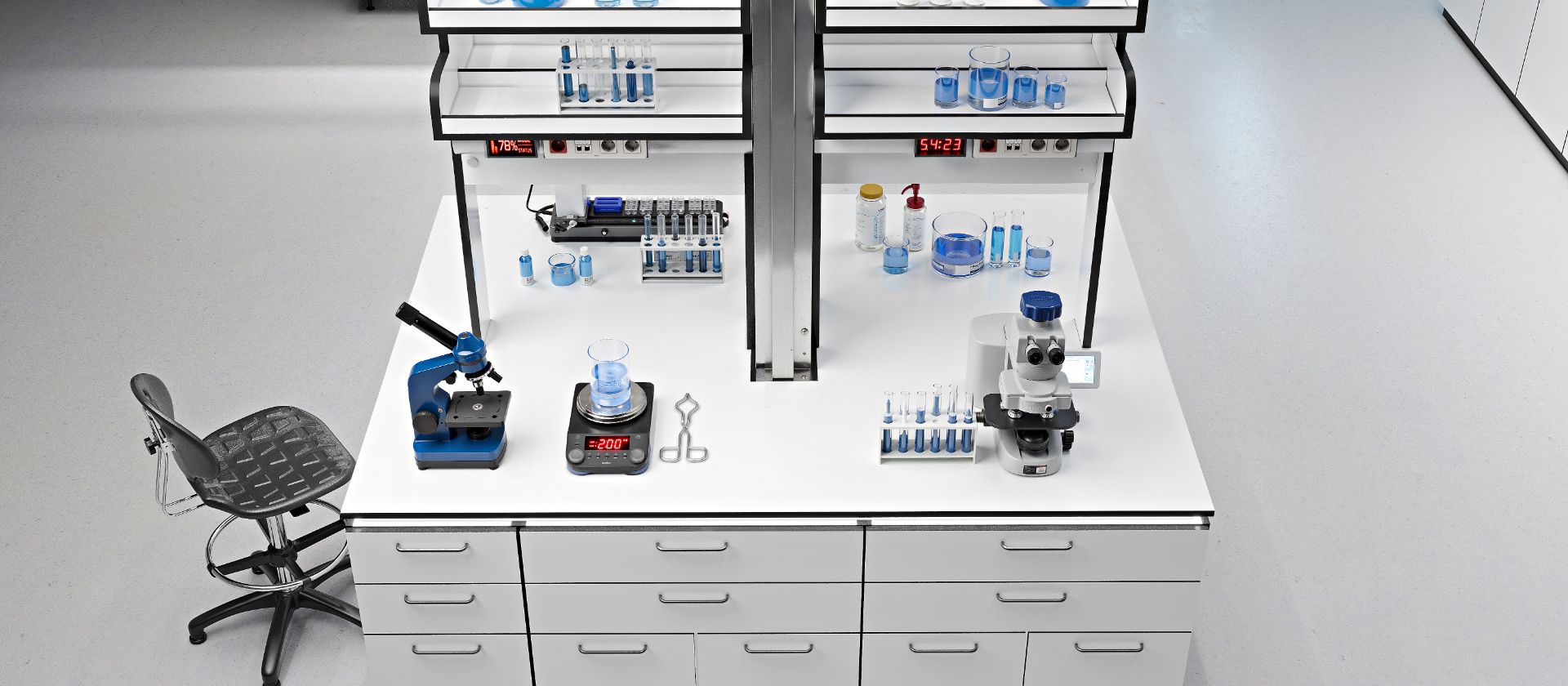
Trespa® TopLab® Ultim is available in a wide range of sizes, thicknesses and colours, ensuring the right specification for every laboratory project.
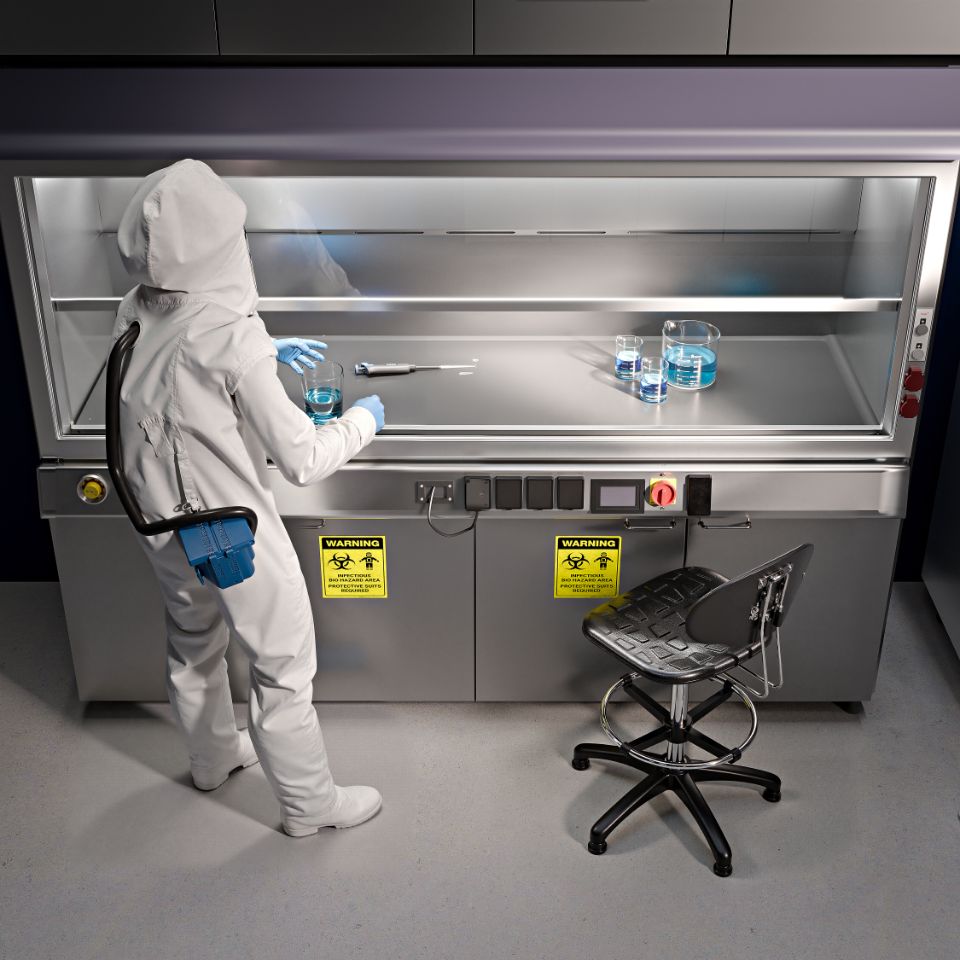
Read more about TopLab® UltimTopLab® Ultim is reinforced through the top layer, so its chemical resistance, heat tolerance and finish hold up under that daily load. This counts in every laboratory, and most of all in:
Whoever specifies the surface makes that choice once, for everyone who will use it afterwards.
Want to know why TopLab® Ultim® delivers superior performance? Download the full technical details: